 English
 German
 Spanish
 Russian
 Italian
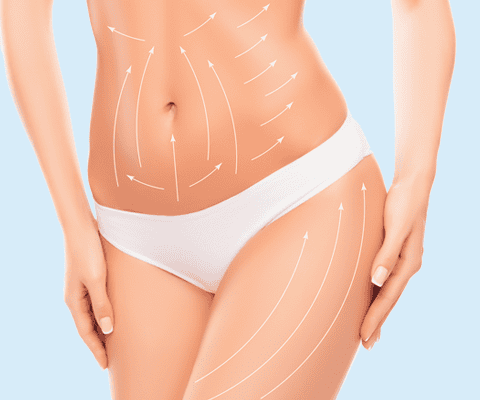
Belly Button After a Tummy Tuck
A well shaped belly button is often what makes a tummy tuck look undetectable. In fact, many people judge the quality of a tummy tuck, without even realizing it, by how natural the belly button looks. A large, round or off center navel can give away an operation that is otherwise excellent.
In this guide, we look at the main belly button types, what research says about the most natural shape, and how the right design is chosen for your body.
What Happens to Your Belly Button?
In a full tummy tuck, your belly button is not removed. It stays attached to its natural stalk, and the surgeon creates a new opening for it in the tightened skin.
During the operation, excess skin and fat are removed from the lower abdomen and the remaining skin is pulled down. Because the belly button is connected to the abdominal wall by a stalk of tissue, it stays where it is while the skin moves over it. The surgeon then makes a new opening in the skin, brings the belly button through and shapes the rim.
If this step is not done carefully, the belly button can look:
- Too round or artificial
- Too wide or flat
- Off center
- Pushed outward, sometimes called a "bloated" or mushroom shape
- Clearly surgical, with a visible scar around the rim
A well designed belly button, on the other hand, blends into the abdomen and looks natural, even in a bikini.
Does a Mini Tummy Tuck Change the Belly Button?
Usually not. A mini tummy tuck removes skin only from the area below the belly button, so the navel itself is typically left untouched. In some cases, a surgeon may "float" the belly button slightly lower without making a new opening. This is one reason the choice between a mini and a full tummy tuck should be discussed with the belly button in mind.
What Research Says About the Ideal Navel
The idea of a "beautiful" belly button is not only a matter of opinion. Several studies have looked at it directly:
- The landmark survey: in a study published in Plastic and Reconstructive Surgery in 2000, a panel rated photographs of 147 women's navels. Small, T shaped or vertically shaped belly buttons with superior hooding, a soft fold at the top, scored highest. Protruding, horizontal, distorted and large navels scored lowest.
- Confirmed by others: a later study with 251 examiners reached similar conclusions.
- A 2023 review of 16 studies in the journal ePlasty concluded that the consensus favors a smaller, vertically oriented belly button.
In other words, a natural looking belly button after a tummy tuck tends to be small, slightly taller than it is wide, and shaded at the top.
Women and Men Need Different Designs
Here is a detail that most tummy tuck guides miss. Measurements show that the ideal proportions differ between the sexes. In women, the average belly button is around 1.4 times taller than it is wide. In men, it tends to be slightly wider than it is tall. Copying a female, strongly vertical design onto a male abdomen can therefore look just as unnatural as a round opening on a woman. An experienced surgeon designs the shape for your body, not for a generic ideal.
Natural Is Rarely Perfectly Symmetrical
In a study of 100 young women who had never been pregnant, most belly buttons showed a slight sideways deviation from the exact midline. Natural anatomy is rarely perfectly symmetrical. The surgical goal is a belly button that looks balanced and believable in your abdomen, not a geometrically perfect circle placed by ruler.
Common Belly Button Types
| Type | What it looks like | After a tummy tuck |
|---|---|---|
| Innie | Sits inward, creates a natural shadow | The usual goal, with subtle depth |
| Vertical | Taller than it is wide, oval or slit like | Rated among the most attractive shapes for women |
| Hooded | Small fold of skin at the top | Superior hooding scored highest in attractiveness surveys |
| Round | Circular opening | A large round shape is often the giveaway of surgery |
| Outie | Protrudes outward | Sometimes linked to a hernia, assessed before surgery |
1. Innie (Indented) Belly Button
The innie is the most familiar belly button type. It sits slightly inward and creates a natural shadow, giving the abdomen depth and definition. To recreate this depth, many surgeons thin the fat around the new opening. In a 2016 systematic review of umbilicoplasty techniques, 8 of the 10 methods described included this step to create a natural hollow.
Best for:
- Natural looking tummy tuck results
- Slim and athletic body contours
2. Vertical Belly Button
A vertical belly button is often considered the most attractive option for women, and research supports it. It elongates the abdomen and enhances a feminine silhouette.
Why surgeons often favor it:
- It looks natural on most female body types
- It matches the proportions measured in natural female navels
- It helps avoid the "operated" look
3. Round Belly Button
A circular belly button is not wrong in itself, but a large, perfectly round opening can look artificial after surgery.
Why it is usually avoided after a tummy tuck:
- It can look flat or wide
- It may draw attention to the abdomen
- Large navels consistently scored lower in attractiveness research
4. Hooded Belly Button
This type has a small natural fold, or hood, at the top that creates a soft shadow. Superior hooding was one of the features most associated with attractiveness in the original survey.
Ideal for:
- Patients who want a very subtle, natural look
- A soft, elegant abdominal appearance
What About an Outie?
An outie belly button protrudes outward. In some people it is simply anatomy, while in others it is linked to an umbilical hernia, a weak spot in the abdominal wall. A hernia can distort the belly button, so your surgeon should check for one before a tummy tuck. If present, it can often be repaired during the same operation, and in some cases the surgeon creates a new belly button.
How Your Belly Button Is Designed
You do not choose a belly button from a catalog. It is designed specifically for your body.
Here is what your surgeon considers:
- Your body proportions: waistline, hip width, torso length and muscle structure all influence the ideal shape and position of the navel.
- Skin thickness and healing capacity: skin quality affects how the belly button settles and how the scar matures.
- Your natural anatomy: the goal is not a "perfect" belly button, but one that looks like it was always yours.
- Your sex: as the research shows, the natural proportions of male and female navels differ.
- Your overall aesthetic goal: whether you want a sporty, elegant or ultra natural look, the design should match the final abdominal contour.
- What else is being repaired: tightening separated abdominal muscles (diastasis recti) or repairing a hernia can affect where and how the belly button sits.
Can You Request a Specific Shape?
Yes, and you should discuss it during your consultation.
You can:
- Share reference photos of belly buttons you like
- Explain what you like or dislike about your current one
- Ask how your belly button will be designed and where the scar will be
That said, an experienced surgeon will always guide you toward what will look most natural on your body, not just what looks good in a photo. A shape that suits a very slim, athletic abdomen may look out of place on a different body type.
What Makes a Good Tummy Tuck Belly Button?
A successful result usually has:
- A vertical or softly oval shape, especially in women
- Subtle depth: not flat, not too deep
- A small, natural size
- A scar hidden inside the rim of the belly button
- Natural positioning, neither too high nor too low
- A soft hood at the top
Size matters in both directions. A belly button that is too large looks surgical, but one that is made too small can narrow as it heals, a complication called umbilical stenosis. It also needs to be large enough to clean easily. If narrowing does occur, surgeons have simple ways to manage it, such as a small soft plug worn during healing.
Most importantly, a good belly button does not draw attention. The best compliment is when no one notices it at all.
Healing: When Will It Look Natural?
Right after surgery, the belly button is often swollen, may have stitches or small crusts and can look different from the final shape. This is normal. Over the following weeks and months, swelling settles, the scar fades and the natural shadow and hood become clearer.
To support good healing:
- Follow your surgeon's instructions on cleaning the belly button
- Avoid strenuous exercise until you are cleared
- Do not use home tricks such as taping objects into the navel unless your surgeon recommends it
- Avoid smoking, which impairs wound healing and raises the risk of complications
- Report increasing redness, discharge or pain promptly
Questions to Ask Your Surgeon
Before your tummy tuck, ask:
- Will I have a full or mini tummy tuck, and will my belly button be repositioned?
- Can I see close up photos of belly buttons in your previous tummy tuck results?
- Which shape and size do you recommend for my body, and why?
- Where exactly will the belly button scar be?
- Do I have an umbilical hernia or muscle separation that will be repaired?
- How should I care for my belly button while it heals?
- What can be done if I am not happy with its shape later?
Close up belly button photos are especially revealing. A surgeon who is proud of this detail will be happy to show them.
Belly Button After Tummy Tuck FAQ
Is my belly button removed during a tummy tuck?
No, not in a standard tummy tuck. The belly button stays on its stalk and is brought through a new opening in the tightened skin. A completely new belly button is created only in specific situations, such as some hernia repairs.
Will I have a scar around my belly button?
Yes, but it is usually placed inside or along the rim, where the natural shadow helps hide it. It fades and softens over the following months.
Can an outie become an innie after a tummy tuck?
Often, yes. If the outie is caused by a hernia, repairing it and reshaping the belly button can create an inward appearance. Your surgeon will assess this at your consultation.
Why does my belly button look odd after surgery?
Early swelling, stitches and healing can make it look different at first. If it still looks too large, too small or pushed outward once healing has settled, a small revision called umbilicoplasty can often improve it.
Can I pierce my belly button after a tummy tuck?
Wait until the area is fully healed and your surgeon agrees. Ask them directly, because timing depends on how your belly button and scar have healed.
Every Detail Matters
A tummy tuck is not only about removing excess skin; it is about creating harmony. The belly button plays a crucial role in that harmony, even though it is small.
When performed with the right technique and an aesthetic eye, the result is a flat, sculpted abdomen with a belly button that looks completely natural, with no artificial appearance. If you are considering a tummy tuck, make sure your surgeon values this detail as much as the rest of the procedure. Sometimes, perfection really is in the details.
Considering a tummy tuck in Türkiye? Contact Best Self Club for an individual consultation and ask our team how your belly button will be designed as part of your plan.
This article is for general information and does not replace an individual consultation with a qualified plastic surgeon.
References
- Craig SB, et al. In Search of the Ideal Female Umbilicus. Plastic and Reconstructive Surgery. 2000;105(1):389 to 392.
- Fell et al. Does Size Really Matter? A Review of How to Determine Optimal Umbilical Size During Abdominoplasty. ePlasty. 2023.
- Joseph WJ, et al. Creating the Perfect Umbilicus: A Systematic Review of Recent Literature. Aesthetic Plastic Surgery. 2016.
- Ribeiro RC, et al. Anatomical position of umbilicus in Latin American patients. European Journal of Plastic Surgery. 2019.
- Guiotto M, et al. Indications, outcomes, and complications of neoumbilical reconstruction: A systematic review. Journal of Plastic, Reconstructive & Aesthetic Surgery. 2024;88:83 to 98.