
 Türkçe
 German
 Spanish
 Russian
 Italian
Plastic Surgery
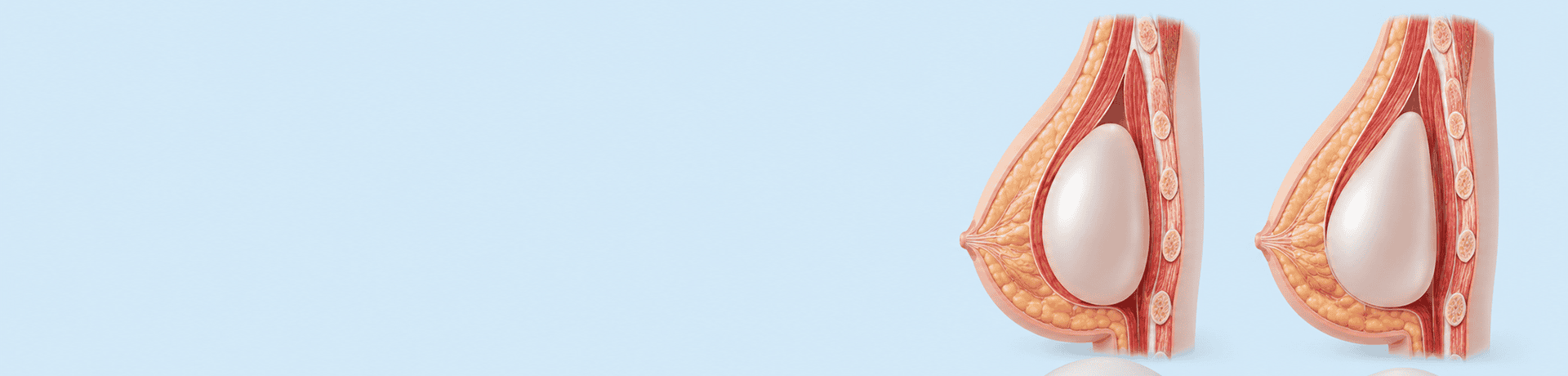
Breast Implant Types and Brands in 2026
Saline or Silicone: What Actually Differs
Every implant has the same basic anatomy: a silicone outer shell and a fill material inside it. That fill material is where saline and silicone part ways.
Saline implants are inserted empty and filled with sterile salt water once they are in place. This means:
- Smaller incisions, since nothing needs to be pre filled
- Adjustable volume during surgery for better symmetry
- Obvious, immediate signs if a rupture ever occurs
- A lower price point compared to silicone
- FDA approval from age 18 for cosmetic augmentation
Silicone gel implants arrive pre filled from the manufacturer and are widely considered the closest match to natural breast tissue. They offer:
- A softer, more natural feel, especially for thinner patients
- Less visible rippling along the edges
- Better shape retention over time
- FDA approval from age 22 for cosmetic augmentation, due to the need for periodic MRI monitoring to catch silent ruptures
There is also a newer hybrid worth knowing about: structured saline implants. These use internal chambers to give a saline fill more shape and stability, aiming to combine the safety profile of saline with a feel closer to silicone. They remain a smaller niche category, but they are worth asking your surgeon about if you like the idea of saline yet want a fuller, more natural result.
Round or Teardrop: Choosing Implant Shape
Shape changes how your breasts sit in a bra, in a swimsuit, and even lying flat on your back.
Round implants add volume evenly, including through the upper breast, which is why they are often chosen for a fuller, lifted look and stronger cleavage. Because they are symmetrical, a slight rotation will not distort the result.
Teardrop, or anatomical, implants taper at the top and carry more volume at the bottom, closer to how natural breast tissue is distributed. They tend to suit patients who want a subtle, athletic result, though because they rely on a textured surface to stay in position, rotation can visibly change the shape and may require a follow up procedure.
Top Breast Implant Brands to Know in 2026
Manufacturer choice affects far more than the box the implant comes in. It shapes your warranty terms, the gel technology inside the shell, and how much clinical history backs your decision.
- Allergan (Natrelle): One of the longest standing names in the category, with a wide range of gel consistencies and a strong warranty and financial assistance program for revisions.
- Mentor (MemoryGel): Backed by Johnson & Johnson, known for a long safety record and a broad selection of sizes, profiles, and surface textures.
- Sientra: A US based manufacturer that focuses solely on aesthetic implants, with advanced gel formulations and a rigorous quality control process.
- Motiva: An international brand built around adaptive gel technology and a built in identification chip, aimed at patients who want the newest available engineering.
No single brand is universally "best." The right one depends on which gel feel, warranty structure, and surgeon familiarity match your goals.
Profile and Projection: Getting Fit Right
Profile describes how far an implant projects from the chest wall relative to its base width, and it matters as much as size does for a natural looking outcome.
- Low profile: wider base, minimal projection, suited to a wider chest wall
- Moderate profile: the most versatile option for most body types
- High profile: narrower base, noticeable projection, often chosen for narrower chests
- Ultra high profile: maximum projection for the most dramatic silhouette
Your surgeon will measure your chest wall width, tissue coverage, and skin elasticity before recommending a profile, since a profile chosen without those measurements is one of the more common reasons patients ask for a revision later.
Sizing: How CC Volume Really Translates
Implants are measured in cubic centimeters, not cup sizes, and the two do not translate in a fixed way from patient to patient. As a general guide:
- 100 to 200cc tends to read as a subtle change, roughly half a cup to one cup
- 200 to 350cc reads as a moderate change, around one to one and a half cups
- 350 to 500cc reads as a significant change, close to two cups
- Above 500cc produces a dramatic, highly noticeable result
Many practices offer three dimensional imaging or trial sizers so you can preview proportions before committing, which is worth requesting even if your surgeon does not bring it up first.
Smooth or Textured: The Surface Question
Surface texture determines how the implant sits inside the breast pocket. Smooth shells move more freely and are currently the more common choice, largely because they carry a lower association with BIA ALCL, a rare lymphoma linked to textured devices. Textured shells grip surrounding tissue and hold position better, which is why anatomical, teardrop shaped implants rely on them, but that same grip can make a future revision more involved.
Safety, Rupture Risk, and Monitoring
All major implant brands are FDA approved and have decades of safety data behind them. Realistic figures to keep in mind:
- Capsular contracture affects roughly 10 to 15 percent of patients over a decade
- Rupture rates run about 2 to 5 percent over ten years for silicone and slightly higher for saline
- Infection occurs in under 1 percent of cases when proper surgical protocol is followed
Silicone implants call for MRI screening roughly every two to three years to catch ruptures that would otherwise go unnoticed, an ongoing cost and time commitment that saline implants do not carry, since a saline rupture is visible right away.
What Breast Implants Cost in 2026
Pricing depends heavily on implant type, geographic location, and surgeon experience, but current ranges look like this:
- Saline implants: roughly 1,000 to 2,000 dollars for the pair, with a total procedure cost between 6,000 and 9,000 dollars
- Silicone implants: roughly 1,500 to 3,000 dollars for the pair, with a total procedure cost between 7,000 and 12,000 dollars, and up to 15,000 dollars when combined with a breast lift
Ongoing MRI monitoring for silicone implants typically runs 500 to 1,000 dollars per scan, a recurring expense worth budgeting for alongside the initial surgery.
Matching Implants to Your Actual Lifestyle
This is the part most guides skip. Your daily routine is often a better guide to implant choice than a spec sheet.
- Frequent flyers and remote workers: silicone's longer monitoring interval and stable shape can suit a schedule where MRI access abroad is inconvenient to plan around.
- Competitive swimmers or contact sport athletes: round, moderate profile implants carry lower rotation risk if impact or repetitive motion is part of your routine.
- Stomach sleepers: a lower or moderate profile tends to feel less restrictive against the mattress than an ultra high profile implant.
- New or planning parents: both implant types generally allow breastfeeding, but incision placement affects this more than fill material, so raise your plans early in the consultation.
- Budget planners: factoring in MRI costs, potential revision surgery, and warranty coverage over a 10 to 20 year span often changes the "cheaper" option on paper.
None of these factors override a proper consultation, but naming them upfront makes that consultation far more productive.
Questions Worth Asking Your Surgeon
- Which implant type and brand do you recommend for my anatomy and goals, and why?
- How many procedures with this specific implant do you perform each year?
- What is your revision rate, and what typically causes it?
- What does your MRI or monitoring protocol look like for silicone patients?
- Can I see recent before and after results from patients with a similar frame to mine?
A surgeon who welcomes these questions, and who avoids pressuring you toward an immediate decision, is generally a stronger sign of trustworthy care than any single brand name.
Frequently Asked Questions
Can I breastfeed with breast implants? Most patients can, and implant type matters less here than incision location, so this is worth discussing directly with your surgeon.
Do implants affect mammograms? They can make imaging slightly more complex and may require additional views, but they do not prevent breast cancer screening.
How long do implants actually last? Many last 15 to 20 years or longer, though individual results vary based on implant quality, surgical technique, and personal factors.
Can I exercise normally afterward? Yes, most patients return to full activity within weeks, though high impact sports may call for extra support during recovery.
There is no single "correct" implant. There is only the combination of type, shape, brand, profile, and size that fits your anatomy, your goals, and the life you actually lead outside the surgery room.
Bring your questions, your lifestyle details, and your long term expectations to more than one board certified plastic surgeon before deciding, and treat this guide as a starting point for that conversation rather than a replacement for it.
Medical disclaimer: This article is for educational purposes only and does not replace professional medical advice. Always consult a board certified plastic surgeon before making decisions about breast augmentation.