
 Türkçe
 German
 Spanish
 Russian
 Italian
Plastic Surgery
Lipedema Liposuction
In January, an international expert consensus published in Nature Communications described lipedema reduction surgery as a medically indicated, functional intervention. In September, The Lancet published LIPLEG, the first large randomized controlled trial comparing liposuction with conservative therapy for lipedema. For the first time, patients and surgeons can rely on randomized data rather than observational case series alone. This guide translates that evidence into plain language. You will learn:
- How liposuction for lipedema differs from cosmetic liposuction
- Who is most likely to benefit, and why your stage matters less than you might think
- What results the research actually supports, and where the evidence is still thin
- How to build a personal "evidence file" that helps any lipedema surgeon assess you properly
What Is Lipedema Liposuction?
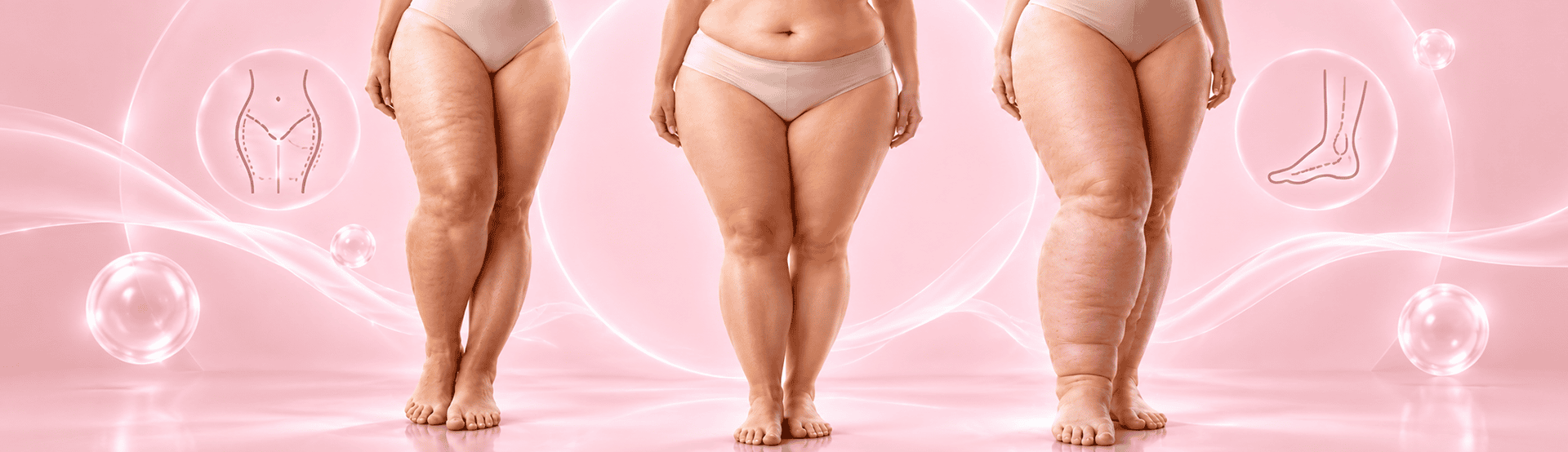
Lipedema is a chronic condition in which painful fatty tissue accumulates symmetrically in the limbs, while the hands, feet and trunk are typically spared. It affects almost exclusively women and often runs in families. A healthy diet and regular movement improve general health, yet the affected tissue itself is known to be largely resistant to dieting. Lipedema liposuction, also called lipedema reduction surgery, removes this abnormal subcutaneous fat through small incisions. According to the 2026 Lipedema World Alliance consensus, it is currently the only technique that physically removes lipedema tissue. Conservative therapy can ease symptoms, but it cannot take the tissue away. Depending on where the disease is located, treatment commonly targets:
- Hips and buttocks
- Outer, inner, front and back of the thighs
- Knees, a frequent source of friction and pain when walking
- Calves and lower legs
- Upper arms, when they are involved
Lipedema Surgery vs Cosmetic Liposuction
Both procedures use cannulas and suction, yet they are planned around very different goals. Cosmetic liposuction removes localized deposits of healthy fat to refine body contour. Volumes are usually moderate, and success is judged mainly by appearance. Lipedema surgery treats a diagnosed medical condition. The 2026 consensus describes it as a medically indicated, functional intervention that aims to reduce symptoms by removing affected tissue. That changes almost every part of the planning:
- Larger areas are treated, often across several sessions
- Protecting lymphatic vessels becomes a central surgical priority
- Success is measured by pain, mobility and daily function, not only by shape
- Compression, aftercare and follow up visits are part of the treatment itself This is why a surgeon who performs excellent cosmetic liposuction is not automatically experienced in lipedema. The consensus panel agreed, with 98% support, that surgery should be performed by providers with extensive knowledge of lipedema management, including diagnosis and conservative care.
Why Pain Matters More Than Appearance
Here is a detail most clinic pages skip. Under the 2024 German S2k lipedema guideline, pain is part of the definition of the disease. Disproportionate fat on the legs without pain should not be diagnosed as lipedema; the guideline classifies it as lipohypertrophy instead. This shapes surgical decisions in two important ways:
- Diagnosis: a provider who diagnoses lipedema from a single photograph is skipping the most important criterion, which is how your tissue feels and behaves.
- Goals: because surgery is a functional treatment, the key question is whether it can reduce your pain, pressure sensitivity, heaviness and bruising, not only how much smaller your legs will look. The same guideline confirms that lipedema is a clinical diagnosis. No blood test or scan proves it. Ultrasound and laboratory tests are still valuable, because they help rule out other causes of limb enlargement, such as venous disease, lymphedema, thyroid problems or heart and kidney conditions.
What the LIPLEG Trial Changed in 2026
For years, the strongest criticism of lipedema surgery was the lack of randomized trials. LIPLEG, commissioned and funded by Germany's Federal Joint Committee and published in The Lancet in September 2026, answered that criticism directly. Key findings:
- 410 women with stage 1, 2 or 3 lipedema and leg pain of at least 4 out of 10 took part at 11 centers in Germany
- Every participant first received several months of conservative treatment (complex decongestive therapy), and only then was randomized to liposuction or continued conservative care
- At 12 months, 68.3% of the liposuction group achieved a clinically meaningful pain reduction of at least 2 points on a 10 point scale, compared with 7.6% of the conservative group
- Average pain fell from about 6.2 to 2.6 after liposuction, while it stayed essentially unchanged with conservative care alone
- The pain response was similar across stages: roughly 68% in stage 1, 73% in stage 2 and 65% in stage 3
- Most surgical patients needed staged treatment: 67% had four procedures and 21% had three The trial also gives an honest picture of safety. Adverse events were more common after surgery (about 47% vs 21%), which the authors described as expected for a surgical intervention. Serious adverse events occurred in about 7.5% of the liposuction group and 3.4% of the conservative group, and no unexpected or potentially life threatening events were reported. Follow up continues to 36 months, so the durability of these results is still being measured. Germany's statutory health insurance now covers liposuction for lipedema in all stages, subject to strict conditions. For patients everywhere, the message is clear: in carefully selected women, surgery offers substantially more pain relief than conservative therapy alone, but it is a real operation with real risks.
Who Is a Candidate for Lipedema Surgery?
There is no single checklist that guarantees candidacy, but lipedema surgery is usually worth discussing when:
- A clinician experienced in lipedema has confirmed the diagnosis
- Pain, pressure sensitivity or heaviness persist despite consistent conservative care
- Tissue bulk causes chafing, an altered gait or difficulty walking
- Symptoms limit your work, exercise or everyday life
- You are medically fit for anesthesia and, if needed, several operations
- Your expectations center on symptom relief rather than a "perfect" shape The consensus panel agreed that lymph vessel sparing lipedema reduction surgery should be considered when there is potential for a positive impact on lipedema symptoms. In other words, the decision rests on likely benefit, not on appearance.
Does Your Lipedema Stage Decide?
Not on its own. Lipedema stages describe how skin and tissue look, not how much a person suffers. 95% of the consensus experts agreed that staging does not reflect the full severity of symptoms, and the German guideline states that morphological stages should not be used to measure severity. LIPLEG now supports this with randomized data, since pain relief was comparable in stages 1, 2 and 3. In practice, this means:
- A woman with stage 1 lipedema can have severe pain and still be a strong surgical candidate
- A woman with stage 3 lipedema may benefit as well, but often needs more sessions and is more likely to have loose skin afterwards
- Earlier treatment may offer extra advantages: in a 2022 study of 106 patients who underwent 298 procedures, the reduction in the need for decongestive therapy was greater in stages 1 and 2 than in stage 3
Lipedema, Obesity and BMI
Lipedema and obesity are different conditions, but they frequently occur together. When they do, the consensus (93% agreement) advises prioritizing treatment of obesity and metabolic disease before lipedema reduction surgery, while keeping the decision individual. Excess weight raises surgical risk and makes it harder to judge which tissue is truly lipedema. BMI alone can be misleading, because lipedema fat sits in the limbs and inflates the number. The German guideline therefore recommends combining BMI with waist to height ratio. Germany's new coverage rules offer a useful benchmark of how seriously preparation is taken:
- A BMI above 35 generally requires weight reduction before surgery is approved
- With a BMI between 32 and 35, the waist to height ratio must be below an age adjusted threshold
- Body weight should be stable for six months before surgery
- Conservative therapy should be followed consistently for six months These are insurance criteria rather than universal medical rules, but they match the research. In the 2022 study mentioned above, patients with a BMI of 35 or lower gained more benefit than those above it. If you use a weight loss medication such as semaglutide or tirzepatide, tell your team early, because these drugs slow stomach emptying and anesthesia plans may need adjusting.
How Lymph Sparing Liposuction Works
Lymphatic vessels run through the same fatty layer that lipedema surgery treats. Lymph sparing liposuction aims to remove diseased fat while minimizing trauma to these vessels, as well as to blood vessels and nerves. Anatomical studies have shown that cannula movements running along the long axis of the limb, parallel to the main lymphatic collectors, cause far less damage than movements across them. Common principles of a lymph sparing approach include:
- Generous tumescent infiltration, so the tissue is firm and structures are cushioned
- Blunt cannulas with a small diameter
- Strokes that follow the direction of the lymphatic pathways
- Extra caution around the inner thigh and inner knee, where lymphatic collectors run close together
- Realistic volume limits per session No technique can promise that the lymphatic system will never be affected. A 2024 systematic review covering 20 studies recorded secondary lymphedema in only 3 patients out of more than 1,700, which is reassuring but not zero.
The Surgical Pathway Step by Step
- Clinical assessment: diagnosis confirmed, other causes of swelling excluded.
- Suitability check: general health, medications, blood tests, thrombosis risk and anesthesia review.
- Surgical mapping: treatment zones are marked, usually while you stand, so the natural shape of the limb is visible.
- Tumescent infiltration: a fluid containing a local anesthetic and epinephrine (adrenaline) is introduced into the fat to reduce bleeding and pain.
- Tissue removal: affected fat is removed through small incisions.
- Compression and monitoring: a compression garment is fitted, and drainage of tumescent fluid from the incisions is expected during the first days.
Which Liposuction Technique Is Best?
Three main techniques appear in the lipedema literature:
- Tumescent liposuction: fat is removed manually after tumescent infiltration
- Power assisted liposuction (PAL): a vibrating cannula helps loosen and remove tissue
- Water jet assisted liposuction (WAL): a pulsating jet of fluid separates fat cells before aspiration A 2024 meta analysis in the Journal of Plastic, Reconstructive & Aesthetic Surgery pooled 10 studies with 906 patients and 2,542 procedures. All three techniques significantly improved pain, bruising, swelling and pressure sensitivity. Complication rates were 1.5% for tumescent liposuction, 4.0% for PAL and 0% for WAL. WAL also showed larger reductions in tension and general impairment, but only one study used WAL alone, so the authors could not declare it superior. A second 2024 review of 20 studies reached the same conclusion: without direct comparative trials, no technique can be called the best for every patient. The practical lesson is simple. The device is a tool; the surgeon's understanding of lipedema, lymphatic anatomy and safe volume limits matters at least as much. Instead of asking "Do you use WAL?", ask "Why is your technique the right choice for my tissue?"
How Many Lipedema Surgeries Will You Need?
The answer depends on how many areas are affected, the total tissue volume, your general health and the amount that can be removed safely in one session. In LIPLEG, most patients had three or four operations. In the 2022 study of 106 patients, the average volume removed was about 6.4 liters per procedure, a figure that describes that clinic's practice, not a target. A staged plan typically separates regions, for example:
- One session for the outer thighs and hips
- Another for the inner thighs and knees
- A further session for the lower legs, and arms separately if needed Sessions are usually spaced weeks to months apart so that blood counts, swelling and tissues can recover. A clinic that promises to treat your entire lower body in a single long operation should explain very clearly how it manages blood loss, fluid balance and anesthesia time.
Lipedema Liposuction Results You Can Expect
Pain, Mobility and Bruising
The research consistently shows meaningful symptom relief in appropriately selected patients:
- A 2024 systematic review of 20 studies reported average reductions of about 72% in pain, 68% in pressure sensitivity, 52% in bruising and 51% in heaviness
- A 2025 meta analysis of 6 studies and 429 patients found that pooled pain scores fell from 5.64 to 1.19 after tumescent liposuction
- A series of 111 patients, most with advanced disease, reported median pain falling from 7.8 to 2.2, with improved mobility in all patients Improvement does not mean every ache disappears. Joint disease, nerve problems, venous disease or excess weight can continue to cause discomfort after surgery, which is why a thorough assessment beforehand matters.
Do Lipedema Liposuction Results Last?
The longest follow up comes from a German study that tracked 60 patients for 12 years. Improvements in spontaneous pain, pressure sensitivity, edema, bruising and restricted movement were maintained. Symptoms rose slightly between years 4 and 8 but did not worsen between years 8 and 12, and the need for conservative therapy stayed lower than before surgery. This held even though body weight changed in both directions: 55% of patients had lost an average of 6.2 kg, while 43% had gained an average of 7.9 kg. Still, surgery is best described as reduction, not cure. Lipedema is a chronic condition, untreated areas can still change, and hormonal shifts or weight gain can influence symptoms. Many patients also continue some conservative care: in LIPLEG, about 69% were still using adjunctive conservative therapy at 12 months, although usually far less of it. All consensus experts agreed that more long term research is needed.
Loose Skin and Leg Shape
Removing large volumes of fat often improves proportions dramatically, but it does not automatically tighten skin. The likelihood of loose skin depends on:
- Age and natural skin elasticity
- Lipedema stage and the amount of tissue removed
- Existing laxity, stretch marks and fibrosis
- Weight history, previous pregnancies and genetics Some retraction happens over the following months. Where significant overhanging skin remains, a separate skin removal procedure may be discussed later. These operations leave longer scars and carry their own risks, so it is important to talk about this possibility before the first liposuction.
Lipedema Surgery Risks and Safety
Lipedema liposuction is surgery, and no responsible clinic presents it as free of risk. Potential complications include:
- Bleeding, hematoma and anemia, especially after large volume sessions
- Seroma (fluid collection) and infection
- Deep vein thrombosis and other clotting problems
- Prolonged swelling or, rarely, lymphatic injury
- Numbness or altered sensation, usually temporary
- Contour irregularities, asymmetry or loose skin
- Rare reactions to the local anesthetic in the tumescent fluid
- Anesthesia related complications Published rates are generally low. The 2024 systematic review of 20 studies reported seroma in 0.82%, hematoma in 0.71% and infection in 0.59% of patients, with no deaths. In the series of 111 patients, serious adverse events occurred in 1.2% of procedures. LIPLEG, with its more rigorous monitoring, recorded serious adverse events in about 7.5% of surgical patients. Your personal risk depends on your health, the extent of each session, the anesthesia method and the quality of care afterwards.
Lipedema Liposuction Recovery and Aftercare
Recovery varies with the number of areas treated and the volume removed, but most patients experience a similar pattern:
- First days: swelling, bruising, soreness, fatigue and fluid leaking from the small incisions
- First weeks: gentle walking is encouraged to support circulation and reduce clot risk, and many people return to light daily activities within days to a couple of weeks
- Following months: swelling settles gradually, tissue softens and contours become clearer Compression is a central part of lipedema liposuction recovery, but the garment type, compression level and wearing schedule should come from your surgical team, not from online forums. Many surgeons also recommend manual lymphatic drainage during the healing phase. Because most patients have staged surgery, the final result can only be judged once the whole treatment course is complete and swelling has fully settled.
Build Your Lipedema Evidence File
Here is a step most patients never hear about. The studies above measure success with pain scores, limb measurements and the need for conservative therapy. If you collect the same information before surgery, you create your own personal scorecard and walk into your consultation with clear, objective data. Start four to eight weeks before your appointment:
- Pain diary: once a week, rate pain, heaviness and pressure sensitivity from 0 to 10 for each leg (and arm, if affected). LIPLEG treated a 2 point drop as clinically meaningful.
- Measurements: record the circumference at the same points every time, such as the ankle, mid calf, just below the knee and mid thigh.
- Photos: front, side and back, in the same lighting, clothing and distance.
- Therapy history: compression class and duration, lymphatic drainage, exercise, and what genuinely helped.
- Weight history: note whether your legs stayed disproportionate even when you lost weight, a classic clue in lipedema.
- Family history: female relatives with a similar leg shape.
- Medications: including weight loss injections, blood thinners, hormones and supplements.
- Three personal goals: concrete ones, such as walking 5 km without stopping, crossing your legs comfortably or bruising less easily. Repeat the same measurements after each stage of treatment. You will see your progress in numbers, not just in the mirror, and your surgeon will have a far better basis for planning the next step.
Questions to Ask Your Lipedema Surgeon
- How many lipedema procedures do you perform each year?
- How did you confirm my diagnosis, and could I also have lymphedema, venous disease or obesity related changes?
- Which liposuction technique do you use, and why is it right for my tissue?
- How do you protect my lymphatic system during surgery?
- How many sessions do you expect, and which areas will each one cover?
- How do you decide the maximum safe volume for each session?
- What improvement in pain and mobility can I realistically expect?
- How likely is loose skin in my case, and what are the options if it happens?
- How do you prevent and manage thrombosis, anemia, seroma and infection?
- Who will follow me during recovery, and whom do I contact if a problem arises?
Red Flags When Choosing a Clinic
Be cautious if a provider:
- Diagnoses lipedema from photographs alone
- Promises a cure or guarantees that lipedema will never return
- Claims there is no risk of lymphatic damage
- Insists one device is unquestionably superior
- Focuses mainly on how many liters can be removed
- Guarantees perfectly smooth skin
- Does not discuss thrombosis or other surgical risks
- Cannot explain who handles your follow up care
- Treats lipedema exactly like cosmetic liposuction
Lipedema Surgery Abroad: Plan the Aftercare
Many women travel for lipedema surgery, often because local access is limited. That can be an excellent choice, provided aftercare is planned as carefully as the operation itself. Before you book, make sure you know:
- Who performs the surgery, and where the operation takes place
- How long you will be monitored after each session
- How thrombosis is prevented before, during and after travel
- Which compression garments are supplied, and how they are fitted
- How lymphatic drainage and follow up will continue once you are home
- When flying is medically appropriate for you, rather than a generic timeline
- Who manages complications after you return
- How staged sessions will be scheduled across several trips For a procedure involving substantial tissue removal, aftercare is part of the treatment, not an optional extra.
Lipedema Liposuction FAQ
Is lipedema liposuction cosmetic surgery?
No. The 2026 international consensus describes lipedema reduction surgery as a medically indicated, functional intervention that reduces symptoms by removing affected tissue. Improved proportions are a welcome effect, but symptom relief is the primary goal.
Can lipedema come back after liposuction?
Treated tissue is removed, and a 12 year follow up study found that symptom improvements were maintained. However, lipedema is chronic, so untreated areas, weight gain or hormonal changes can still influence symptoms. Surgery is best viewed as lasting reduction rather than a guaranteed cure.
Is WAL better than PAL for lipedema?
Not proven. One 2024 meta analysis found favorable results for WAL, but they rested on a single study. All main techniques improve symptoms, and surgeon experience matters at least as much as the device.
Can stage 1 lipedema be treated with liposuction?
Yes, when symptoms justify it. In the LIPLEG trial, women with stage 1 lipedema had a pain response similar to those in stages 2 and 3.
Will I need compression after lipedema surgery?
Possibly, though often less. Long term studies show a reduced need for conservative therapy after surgery, but many patients continue some compression or exercise therapy to maintain their results.
Will insurance cover lipedema surgery?
It depends entirely on your country and insurer. Germany now covers liposuction for lipedema in all stages under defined conditions, while many other systems still classify it differently. Always confirm coverage directly with your insurer before planning treatment.
Does lipedema liposuction hurt?
The procedure is performed under anesthesia, so you should not feel pain during surgery. Soreness, tightness and swelling are normal during recovery and are usually well controlled with medication and compression.
Start With an Individual Assessment
Lipedema liposuction is not about how many liters can be removed or which machine is used. The right starting question is this: do you have a confirmed diagnosis, are you a suitable candidate, and can surgery reasonably improve your symptoms at an acceptable level of risk? At Best Self Club, every lipedema journey begins with an individual medical assessment that considers:
- Your medical history and current symptoms
- The distribution of your lipedema and your skin quality
- Previous treatments and your weight and metabolic history
- Your mobility and personal treatment goals Where surgery is appropriate, your plan defines which areas to treat, whether to stage the operations, the most suitable liposuction approach, hospital and anesthesia planning, compression, and follow up after you return home. Request a lipedema assessment with our medical team to find out whether lipedema reduction surgery is the right next step for you.
This article is for general educational purposes and does not replace a physical examination, diagnosis or individual medical advice. Suitability, technique, risks and outcomes vary between patients.
